
Child Custody Lawyers in Pakistan for Guardianship, Visitation & Family Court Cases

Call us on WhatsApp for Free Consultation!

Protecting the Welfare of Children and Parental Rights

Child custody disputes can arise after Divorce, Khula, separation, remarriage, relocation or disagreement between parents. These cases may determine where a child lives, how the child meets the other parent, who makes important legal decisions, and whether a formal guardianship order is required.

At Right Law Associates, our child custody lawyers assist mothers, fathers and other eligible family members with custody, guardianship, visitation rights, interim custody, recovery of minors, child maintenance and overseas custody matters.

Our family-law practice provides legal assistance in Karachi, Islamabad, Lahore and other parts of Pakistan, including representation for overseas Pakistani parents.

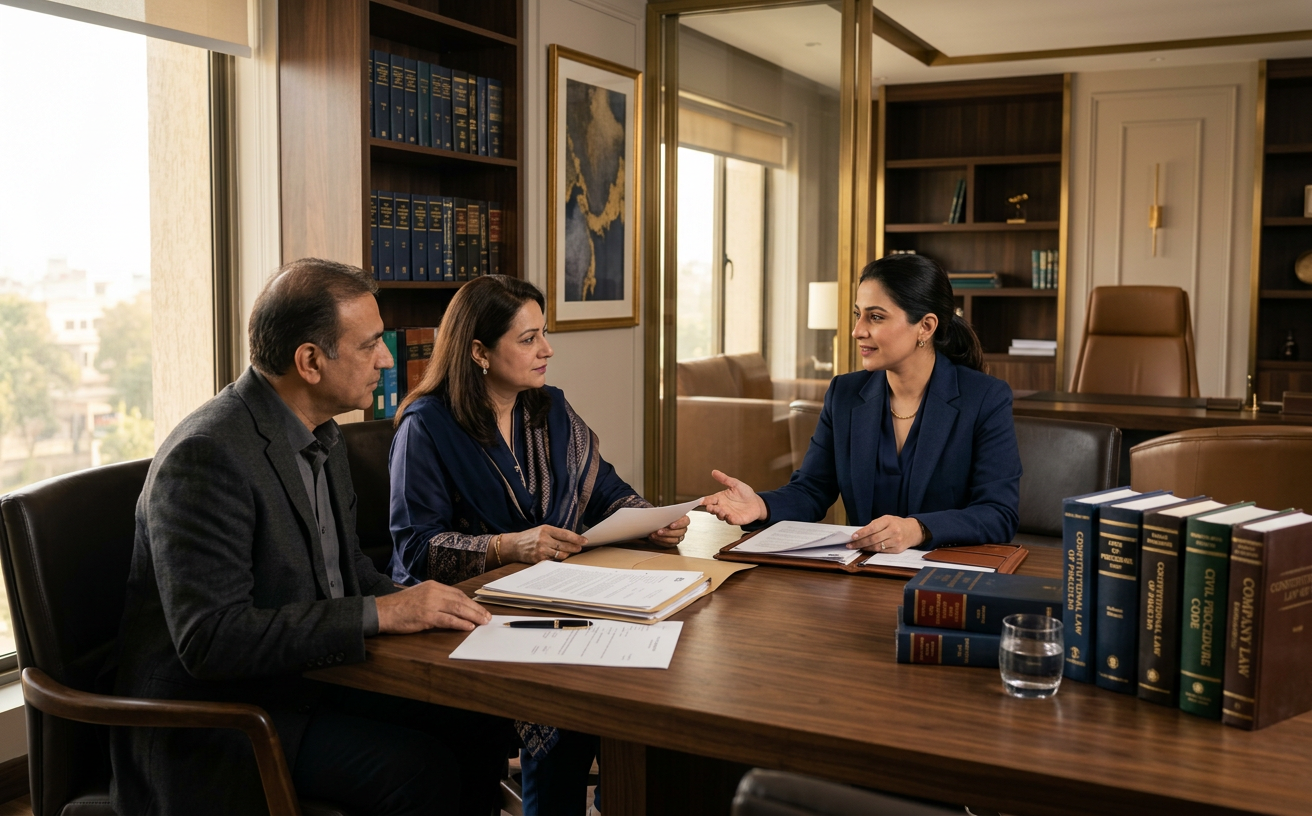
Child custody and guardianship lawyers in Karachi advising parents about custody, visitation and Family Court matters

Our Child Custody & Guardianship Services

  • Child Custody Petitions
  • Guardianship Applications
  • Interim Custody
  • Visitation and Meeting Rights
  • Recovery of Minor Children
  • Enforcement of Custody Orders
  • Modification of Existing Orders
  • Guardianship Certificates
  • Passport and Travel Guardianship
  • Overseas Child Custody Matters
  • Child Maintenance
  • Custody After Divorce or Khula

Speak With a Child Custody Lawyer

Legal Services

Syed mohsin Ali Shah
Phone : +92316-6644789

Let's Connect

Child Custody Law in Pakistan

Child custody and guardianship matters in Pakistan are principally dealt with through the Family Courts Act, 1964, the Guardians and Wards Act, 1890, applicable Muslim personal law principles and judicial precedents.

The most important principle is the welfare of the minor.

Custody is therefore not determined merely by asking which parent has a stronger personal claim.

The Court considers what arrangement best protects the child’s:

  • physical welfare;
  • emotional stability;
  • education;
  • health;
  • safety;
  • upbringing;
  • continuity of care; and
  • overall development.

Traditional principles relating to Hizanat, parental status or preferential custody may be relevant, but they remain subject to the paramount consideration of the child’s welfare.

Child Custody vs Guardianship vs Visitation Rights

These three concepts are frequently confused.

Legal Issue

Child Custody

Guardianship

Visitation Rights

Main Question

Who should care for and live with the child?

Who has legal authority over the minor/person/property?

How will the non-custodial parent meet the child?

Daily Care

Central issue

May or may not involve daily physical care

No

Legal Authority

Limited by circumstances

Central issue

Usually no general guardianship authority

Typical Use

Divorce, Khula, separation, child recovery

Passport, property, legal representation, travel

Parent denied access

Court Focus

Welfare and care of minor

Welfare and suitability of guardian

Welfare and continuing parental relationship

Can Separate Proceedings Be Needed?

Yes

Yes

Yes

Same Legal Concept?

No

No

No

A parent may therefore have physical custody without having every legal power associated with guardianship, while another parent may retain legal responsibilities despite not having day-to-day custody.

Need urgent legal help in Karachi?

Call or WhatsApp Right Law Associates for confidential consultation

Child Custody Guardianship Lawyers in Karachi for Family Court Cases Visitation Rights Guardianship Certificates

Who Gets Child Custody After Divorce in Pakistan?

No single automatic rule determines custody in every divorce.

The Court considers the circumstances of the individual child and family.

Factors may include:

Factor

Why It Can Matter

Child’s Age

Younger children may require particular care and continuity

Existing Caregiver

The Court may consider who has actually been caring for the child

Emotional Bond

Attachment to each parent may be relevant

Education

Stability of schooling may be important

Health

Medical or special-care requirements may affect arrangements

Safety

Abuse, neglect or an unsafe environment is highly relevant

Living Conditions

Stability and suitability of the proposed home

Parental Conduct

Conduct affecting the child’s welfare may be considered

Financial Circumstances

Relevant, but wealth alone does not determine custody

Child’s Preference

May be considered where the child is old and mature enough

Family Environment

Continuity, security and support can matter

Overall Welfare

The controlling consideration

The Court does not treat custody as a reward for one parent or a punishment for the other.

The focus remains the minor’s welfare.

Does the Mother Automatically Get Custody?

A mother may have a recognised preferential right of Hizanat, particularly for children of tender age, but this should not be described as an absolute rule applicable regardless of circumstances.

The Court can examine whether continued custody with the mother serves the child’s welfare.

Relevant matters may include:

  • the mother’s existing caregiving role;
  • the child’s age;
  • emotional attachment;
  • schooling;
  • living arrangements;
  • safety;
  • health;
  • conduct of both parents; and
  • the child’s overall welfare.

The fact that a mother has obtained Khula or Divorce does not automatically deprive her of child custody.


Does a Mother Lose Custody After Remarriage?

Not automatically.

Remarriage may be a relevant circumstance, but Pakistani superior courts have repeatedly treated the welfare of the minor as paramount rather than applying remarriage as an inflexible bar.

The Court may consider:

  • the child’s relationship with the mother;
  • the new household;
  • safety and stability;
  • the child’s age;
  • treatment by the step-parent;
  • education;
  • emotional welfare; and
  • all other relevant circumstances.

A custody case should therefore be decided on its facts rather than on one factor alone.

Can a Father Obtain Child Custody?

Yes.

A father may seek:

  • custody;
  • interim custody;
  • visitation;
  • guardianship;
  • recovery of a child; or
  • modification of an existing custody arrangement.

The Court examines whether the father’s proposed arrangement serves the child’s welfare.

A father’s financial position alone does not automatically entitle him to custody, just as a mother’s status alone does not automatically decide every case.

Mother vs Father in a Child Custody Case

Issue

Mother

Father

Can seek custody?

Yes

Yes

Can seek guardianship?

Yes, depending on legal circumstances

Yes

Can seek visitation?

Yes

Yes

Is financial strength alone decisive?

No

No

Remarriage automatically decisive?

No

No

Child’s welfare applies?

Yes

Yes

Can Court vary arrangements later?

Yes

Yes

Can overseas residence matter?

Yes

Yes

The correct question is therefore not simply “Does the mother or father have the stronger right?”

The Court ultimately examines what arrangement serves the minor’s welfare.


Mother seeking child custody after divorce in Karachi Family Court

Child Custody After Khula

A mother does not automatically lose custody because she obtained Khula.

Khula dissolves the matrimonial relationship between husband and wife.

Child custody concerns the children’s welfare and care.

These are legally distinct questions.

A Khula case may therefore be followed by, or accompanied by, disputes involving:

  • physical custody;
  • visitation;
  • child maintenance;
  • guardianship;
  • travel;
  • schooling; or
  • recovery of children.

Parents should avoid treating custody as a bargaining condition for granting or obtaining Khula.

Child Custody After Talaq

Similarly, Talaq by the husband does not automatically determine who permanently keeps the children.

If parents cannot agree upon an arrangement consistent with the children’s welfare, the competent Family Court may be approached.

A parent may require:

  • interim custody pending final decision;
  • permanent custody;
  • visitation arrangements;
  • recovery of the child;
  • guardianship; or
  • enforcement of an existing order.

What Is Guardianship of a Minor in Pakistan?

Guardianship concerns legal authority and responsibility for a minor’s person or property, depending on the nature of the application.

The Guardians and Wards Act, 1890 provides the main statutory framework for appointing and declaring guardians.

A guardianship order may become important where formal authority is required to act on behalf of a minor.

Examples may involve:

  • passport matters;
  • immigration;
  • international travel;
  • education;
  • management of a minor’s property;
  • inheritance;
  • legal representation;
  • financial affairs; or
  • other official matters.
Father obtaining child visitation rights through family court in Karachi

Custody and Guardianship Are Not the Same

Question

Custody

Guardianship

Who physically cares for the child?

Usually central

Not necessarily

Who can legally represent the minor?

Not always determined by custody alone

Central issue

Can concern property?

Usually no

Yes

Used in passport/travel matters?

Sometimes relevant

Frequently important

Based on welfare of minor?

Yes

Yes

Can existing caregiver seek it?

Yes, depending upon circumstances

Application may be made according to law

Court order required in dispute?

Often

Often

This distinction is especially important for divorced parents and overseas families.

Guardianship Certificate in Pakistan

The expression “guardianship certificate” is commonly used for the Court order or formal documentation establishing guardianship of a minor.

A guardianship proceeding generally requires the applicant to provide information concerning:

  • the minor;
  • parents;
  • current caregiver;
  • proposed guardian;
  • residence;
  • purpose of guardianship;
  • property of the minor, if relevant; and
  • reasons why the proposed arrangement serves the minor’s welfare.

The Court may issue notices and examine evidence before deciding whether to grant guardianship.

Guardianship for Passport, Visa and International Travel

One of the most common practical reasons for seeking guardianship is the need to manage a child’s documentation.

A parent may require legal authority concerning:

  • passport issuance or renewal;
  • visa applications;
  • immigration matters;
  • foreign residence;
  • international travel;
  • school admission abroad;
  • embassy documentation; or
  • related official procedures.

Whether a guardianship order is actually required depends upon the facts and the requirements of the relevant authority.

A parent should therefore obtain legal advice based upon the specific documentation being requested.

Need Guardianship for a Child's Passport or Travel?

Our family-law team can review your existing custody documents and advise whether a guardianship application or another Court order is appropriate.

Visitation Rights in Pakistan

Where one parent has physical custody, the other parent may seek visitation or meeting rights.

A practical visitation order may deal with:

  • weekly or fortnightly meetings;
  • weekends;
  • school holidays;
  • Eid holidays;
  • birthdays;
  • telephone calls;
  • video calls;
  • supervised meetings; or
  • longer access periods where appropriate.

The arrangement should be designed around the welfare and routine of the child rather than simply the convenience of either parent.

Custody vs Visitation

Issue

Custody

Visitation

Child normally resides with parent?

Usually yes

Usually no

Day-to-day responsibility

Usually yes

Limited during access

Purpose

Care and residence

Maintain parent-child relationship

Court can set schedule?

Yes

Yes

Can be interim?

Yes

Yes

Can be changed later?

Yes

Yes

Welfare test applies?

Yes

Yes

Where a parent repeatedly denies Court-ordered visitation without justification, the affected parent may seek enforcement or modification of the existing arrangement.

Interim Child Custody

Custody litigation may take time, but some child-related problems require immediate attention.

Section 12 of the Guardians and Wards Act, 1890 gives the Court powers concerning production of the minor and temporary custody or protection pending proceedings.

Interim relief may become relevant where:

  • a child has suddenly been removed;
  • the child is being withheld;
  • schooling has been disrupted;
  • urgent medical needs are involved;
  • there are serious safety concerns;
  • one parent threatens immediate relocation; or
  • an existing arrangement has broken down.

An interim order does not necessarily determine the final custody case.

Child Recovery Cases

A parent may require urgent legal assistance where a child:

  • has not been returned after visitation;
  • has been removed from the usual caregiver;
  • is being concealed;
  • has been taken to another city;
  • has been removed from school;
  • is being denied necessary care; or
  • is being kept contrary to an existing Court order.

The appropriate legal remedy depends upon the circumstances and existing orders.

A lawyer should first establish who presently has the child, what Court orders already exist, where the child is located and what immediate welfare issue is involved.

Documents for Child Custody and Guardianship Cases

Type of Document

Why It May Be Relevant

Child’s Birth Certificate / B-Form

Establishes identity and parentage

Parents’ CNICs

Identity of parties

Nikah Nama

Family relationship and marriage particulars

Divorce / Khula Documents

Shows current matrimonial status where relevant

Existing Custody Orders

Establishes prior Court arrangements

School Records

Demonstrates education and routine

Medical Records

Relevant to health and care

Maintenance Records

Shows financial support

Residence Evidence

Shows proposed living arrangements

Communication Records

May be relevant to access or withholding disputes

Travel Documents

Important in overseas or relocation cases

Evidence of Caregiving

May establish existing care arrangements

Property Documents

Relevant in guardianship of minor’s property

Not every case requires every document.

Evidence should be selected according to the actual issue before the Court.

Family court custody case hearing in Karachi Pakistan

What Does the Court Consider Under Guardianship Law?

Under the Guardians and Wards Act, the Court considers matters relevant to the welfare of the minor.

These may include:

  • age of the minor;
  • sex of the minor;
  • religion;
  • character and capacity of the proposed guardian;
  • nearness of kin;
  • wishes of a deceased parent where relevant;
  • existing or previous relationship with the minor; and
  • the minor’s own preference where the child is old and mature enough to form an intelligent preference.

No individual factor should be presented as mechanically deciding every case.

The ultimate inquiry remains the minor’s welfare.

Child’s Preference in Custody Cases

Where a child is sufficiently mature to express an intelligent preference, the Court may consider the child’s wishes.

However, the child’s preference does not necessarily control the result.

The Court can assess:

  • age;
  • maturity;
  • reasons for the preference;
  • possibility of influence or pressure;
  • relationship with each parent; and
  • whether the preferred arrangement actually serves the child’s welfare.

This is particularly important in contested cases involving older children.

Can Custody Orders Be Changed?

Yes.

A custody or visitation arrangement may require modification where circumstances materially change.

Examples can include:

  • relocation;
  • change of school;
  • change in caregiver;
  • remarriage;
  • health issues;
  • persistent denial of visitation;
  • safety concerns;
  • changed work arrangements;
  • child becoming older; or
  • new circumstances affecting welfare.

The party seeking modification should explain why the existing arrangement is no longer appropriate for the child.

Child Maintenance and Custody Are Separate Rights

A custody dispute should not be confused with child maintenance.

A father cannot ordinarily avoid child-maintenance responsibilities merely because he does not have custody.

Likewise, a custodial parent should not ordinarily treat denial of visitation as a substitute for pursuing unpaid maintenance through legal proceedings.

Issue

Child Custody

Child Maintenance

Main Concern

Care and welfare

Financial support

Same claim?

No

No

Divorce ends obligation?

No

No

Court order possible?

Yes

Yes

Can be litigated together/alongside?

Depending upon procedure

Depending upon procedure

Child’s welfare relevant?

Central

Central to needs/support

Children should not become instruments for settling financial disputes between parents.

Overseas Child Custody Cases

Custody disputes become more complicated when:

  • one parent lives abroad;
  • the child holds another nationality;
  • a parent intends to relocate;
  • a child has been taken abroad;
  • a foreign custody order exists;
  • passports are being withheld;
  • travel consent is disputed; or
  • guardianship is needed for immigration purposes.

Our family lawyers assist overseas Pakistanis with Pakistan-based custody and guardianship proceedings, including representation through counsel and appropriate Powers of Attorney where legally permissible.

Child Relocation and International Travel

A parent planning to move a child to another city or country should not assume that existing custody automatically permits every relocation.

Relocation can affect:

  • schooling;
  • visitation;
  • the child’s relationship with the other parent;
  • travel documentation;
  • existing Court orders; and
  • the child’s overall welfare.

Where relocation is disputed, appropriate Court directions may be necessary.

Special Power of Attorney for Overseas Parents

An overseas parent may, where legally permissible, appoint an attorney in Pakistan through a properly drafted Special Power of Attorney.

Depending upon the case, authority may include:

  • engaging counsel;
  • filing permitted applications;
  • receiving notices;
  • obtaining certified copies;
  • appearing before relevant authorities;
  • pursuing guardianship documentation; and
  • performing other specifically authorised procedural acts.

Whether the parent must personally appear at any stage depends upon the nature of the proceedings and the Court’s requirements.

Child Custody Lawyers for Mothers

Mothers commonly seek legal assistance where:

  • children remain with the father or paternal family;
  • access has been denied;
  • the husband threatens to remove the children;
  • custody is disputed after Khula;
  • maintenance is unpaid;
  • children require passports or travel documents; or
  • an existing Court arrangement is being violated.

A mother’s case should be presented around the child’s welfare and actual caregiving circumstances, not merely her marital status.

Child Custody Lawyers for Fathers

Fathers commonly seek assistance relating to:

  • visitation rights;
  • custody;
  • guardianship;
  • school access;
  • child recovery;
  • relocation concerns;
  • overseas travel;
  • enforcement of visitation orders; or
  • defence against allegations affecting custody.

A father seeking greater custody or access should demonstrate how the proposed arrangement serves the child’s welfare.

Custody Rights of Grandparents and Other Relatives

In some cases, neither parent is presently able to provide appropriate care.

Grandparents or other relatives may become involved where:

  • parents are deceased;
  • both parents live abroad;
  • a parent is seriously ill;
  • the child has long lived with relatives;
  • there are concerns about parental fitness; or
  • guardianship is needed for property or documentation.

Such cases remain subject to the legal framework and the welfare of the minor.

Child Custody Case Procedure in Pakistan

A custody or guardianship proceeding generally involves several stages.

Stage

Typical Step

Initial Review

Lawyer examines family history, child circumstances and existing orders

Preparation

Petition/application and supporting documents are prepared

Filing

Matter is instituted before the competent Court

Notice

Other relevant parties are notified

Interim Relief

Temporary custody/production orders may be sought if necessary

Evidence

Parties present relevant material and witnesses

Child Interaction

Court may interact with a sufficiently mature child

Welfare Assessment

Court considers circumstances affecting the minor

Final Order

Custody/guardianship/visitation determination

Enforcement

Further proceedings may be required if order is ignored

Each case differs according to its facts.

Why Hire a Child Custody Lawyer?

Child custody cases are evidence-driven and fact-sensitive.

A family lawyer can help identify:

The Correct Remedy

Whether the matter requires custody, guardianship, visitation, child recovery, interim relief or enforcement.

The Correct Court

Territorial and subject-matter jurisdiction should be considered before filing.

Relevant Evidence

The case should focus on material affecting the child’s welfare rather than irrelevant allegations between spouses.

Interim Protection

Urgent relief may be required before the final case is decided.

Practical Visitation Terms

Orders should be workable for the child, parents and school routine.

Connected Family Claims

Custody may overlap with maintenance, divorce, Khula or guardianship issues.

Need Immediate Advice About Your Child?

If a child has been removed, visitation has been denied, a parent is threatening relocation or you need guardianship for travel or official documentation, obtain legal advice before the position becomes more difficult.

Call or WhatsApp Right Law Associates for confidential consultation.

Child Custody Lawyers in Karachi, Islamabad and Lahore

Right Law Associates provides custody and guardianship representation through its family-law practice in major Pakistani cities.

Child Custody Lawyers in Karachi

Custody, guardianship, child recovery, visitation and Family Court proceedings.

Child Custody Lawyers in Islamabad

Custody, guardianship, overseas matters, visitation and child-related Family Court cases.

Child Custody Lawyers in Lahore

Custody, guardianship, maintenance, visitation and related family proceedings.

This national page should link to dedicated local pages rather than repeating extensive city-specific material.

Why Choose Right Law Associates for Child Custody Matters?

Right Law Associates has provided legal services since 1985.

Our family-law work includes:

  • child custody;
  • guardianship;
  • Divorce;
  • Khula;
  • visitation rights;
  • child maintenance;
  • overseas family matters; and
  • related Family Court litigation.

Custody cases require a child-focused legal strategy, careful documentary preparation and realistic advice.

We represent both mothers and fathers while keeping the welfare of the child at the centre of the case.

Frequently Asked Questions About Child Custody in Pakistan

There is no automatic answer applicable to every family. The Court considers the welfare of the minor, including care, education, health, safety, emotional stability and other relevant circumstances.

No rule should be treated as absolute. A mother’s preferential right of Hizanat may be relevant, particularly for young children, but the overriding consideration remains the child’s welfare.

Yes. A father may seek custody where the proposed arrangement serves the welfare of the child.

No. Obtaining Khula does not automatically deprive a mother of custody.

Not automatically. Remarriage may be considered, but the Court ultimately examines the welfare of the minor.

Custody generally concerns day-to-day care and residence. Guardianship concerns broader legal authority over the minor’s person or property.

It is commonly used to describe the formal Court documentation establishing or declaring guardianship.

Depending upon the circumstances and purpose of the application, a mother may seek appropriate guardianship relief from the Court.

It depends upon the particular family circumstances and the requirements of the passport or other authority. Formal guardianship may be required in some cases.

Travel-related relief depends upon existing custody arrangements, parental rights, documentation and the child’s welfare.

A parent should not assume an unrestricted right to deny access. Where visitation is disputed, the Family Court can determine an appropriate arrangement.

Yes. Where a Court-ordered visitation arrangement is being ignored, legal enforcement may be sought.

The Guardians and Wards Act allows temporary custody and protective orders during proceedings where appropriate.

A sufficiently mature child’s preference may be considered, but it is not necessarily decisive. The Court still determines what serves the child’s welfare.

Financial capacity is relevant to the child’s needs but is not, by itself, determinative of custody.

Maintenance and visitation are legally distinct issues. One dispute should not automatically be used to determine the other.

Yes. Changed circumstances affecting the child’s welfare may justify an application to vary an existing order.

Depending upon the circumstances, grandparents or other relatives may apply for guardianship where legally appropriate.

Yes. Overseas parents may pursue Pakistan-based custody or guardianship cases through legal representation, subject to procedural and personal-appearance requirements.

Relevant documents may include CNICs, B-Forms, birth certificates, school records, medical documents, existing Court orders, divorce papers, evidence of maintenance and other material affecting the child’s welfare.

Consult Our Child Custody & Guardianship Lawyers in Pakistan

If you are facing a dispute concerning Child Custody, Guardianship, Visitation, Child Recovery or International Travel, obtain legal advice based upon the child’s actual circumstances and any existing Court orders.

Our family-law team can review your documents, explain the available legal remedies and assist with proceedings before the competent Court.

Right Law Associates

Karachi | Islamabad | Lahore | Legal Assistance Across Pakistan

Confidential legal assistance for parents and families in Pakistan and overseas.