
Court Marriage, Online Marriage, and Nikah Khawan Services in Islamabad & Rawalpindi are becoming increasingly popular due to their convenience and efficiency. Many couples are opting for these services to simplify the marriage process, avoiding the traditional and often lengthy procedures. With the help of experienced Nikah Khawans, couples can easily get married in a court or even online, ensuring a hassle-free experience.
Comprehensive Marriage Services in Islamabad and Rawalpindi
Our court marriage, online marriage, and Nikah Khawan services offered in Islamabad and Rawalpindi cater to the diverse needs of couples, providing them with a range of options to choose from, including online marriage certificates, court marriage registration, and Nikah ceremonies. Whether it’s a traditional or modern approach, these services aim to make the marriage process as smooth and stress-free as possible, allowing couples to focus on their special day and start their new life together.

Court marriage in Islamabad and Rawalpindi is a formal union between a man and a woman that is officiated by a lawyer and Nikah Registrar, making them legal life partners. To complete this process, both parties are required to have valid CNICs; if CNICs are not available, a passport or Matriculation certificate can be used as an alternative. It is advisable to consult a legal expert for specific requirements and procedures.
Marriage is a significant milestone in one’s life, and the diverse range of marriage services available in Islamabad and Rawalpindi, collectively known as the Twin Cities, cater to the varying needs of couples. Whether one prefers a traditional ceremony or opts for a more streamlined legal process, the Twin Cities offer a spectrum of options, reflecting the cultural richness and legal frameworks of Pakistan.
At the heart of marriage services in these cities lies the fusion of cultural traditions and legal requirements. Court marriage, for instance, is a legally recognized procedure where couples can solemnize their union in the presence of a magistrate or legal official. This form of marriage provides a straightforward and efficient way for couples to get legally married, often bypassing the elaborate ceremonies traditionally associated with marriage in Pakistan.
On the other hand, online marriage services have gained popularity, especially in the post-pandemic era. These services facilitate the marriage process through virtual platforms, ensuring that legal prerequisites are met without the physical presence of either party. This method offers an innovative solution for couples residing in different locations or those seeking convenience and discretion in the marriage process.
Traditional Nikah-Khawan services, deeply rooted in Islamic customs, remain a cherished option for many. A Nikah-Khawan, or Islamic marriage registrar, officiates the marriage, ensuring that all religious protocols are observed. These services are not only a testament to Pakistan’s rich cultural heritage but also ensure that marriages are conducted according to religious doctrines, particularly in the cities of Islamabad and Rawalpindi.
The availability of these varied marriage services in the Twin Cities underscores the adaptability and inclusivity of marriage practices in Pakistan. Understanding the cultural and legal landscape of court marriage, online marriage, and Nikah-Khawan services sets the foundation for couples to make informed choices based on their preferences and circumstances.
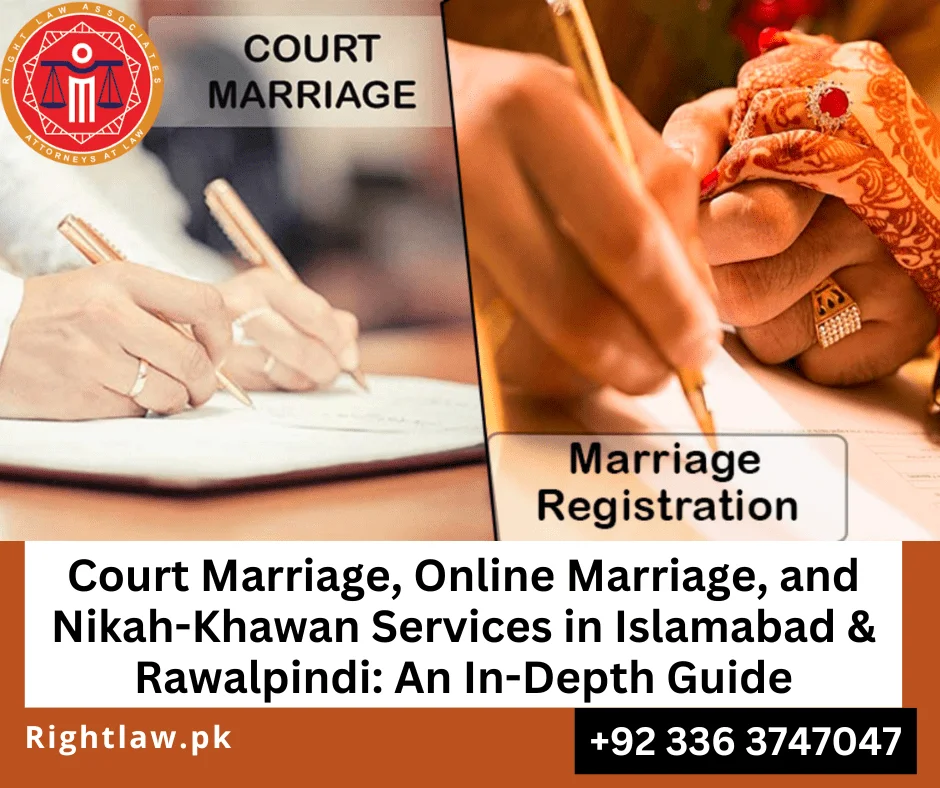
Court marriage is a streamlined legal procedure that allows couples to solemnize their union civilly, a method distinct from traditional or religious ceremonies. In the twin cities of Islamabad and Rawalpindi, this procedure is guided by the national law of Pakistan, ensuring its legitimacy and legal standing. Irrespective of religious affiliation, court marriage is accessible to all within the ambit of the law, providing numerous legal benefits.
The process begins with the collection of essential documents. Both parties need to present their National Identity Cards (NICs) or passports along with two witnesses. An affidavit affirming the free will and consent of both parties as well as the absence of any existing marriage is also mandatory. In cases where one or both individuals were previously married, a divorce decree or a death certificate of the former spouse is required.
Eligibility largely hinges on the age and marital status of both parties. The legal age for marriage in Pakistan is 18 for females and males. Individuals must confirm that they fall within these age brackets and are not bound by any prior marital commitments unless appropriately resolved through legal divorces or annulments. Furthermore, both individuals must willingly consent to the marriage without any coercion, a stipulation that the court rigorously verifies.
The step-by-step procedure involves reporting to the designated court office in Islamabad or Rawalpindi, presenting the necessary documentation, and completing the provided forms. Upon verification of the documents, the Nikah Registrar schedules a date for the official marriage declaration. Both parties, along with their witnesses, must be present on this date to formally declare their consent before the Nikah Registrar. After the declaration, an official Nikahnama/marriage certificate is issued, solidifying the union’s legal status.
Court marriage offers multiple legal benefits, including official recognition by the state, inheritance rights, and ease in civil matters such as visa processes. However, couples might face challenges such as societal judgments or familial opposition, particularly in conservative sectors of Rawalpindi and Islamabad. Legal challenges may arise if documentation is incomplete or if either party fails to meet the eligibility criteria. Yet, with meticulous preparation and adherence to legal requirements, these hurdles can be effectively managed.
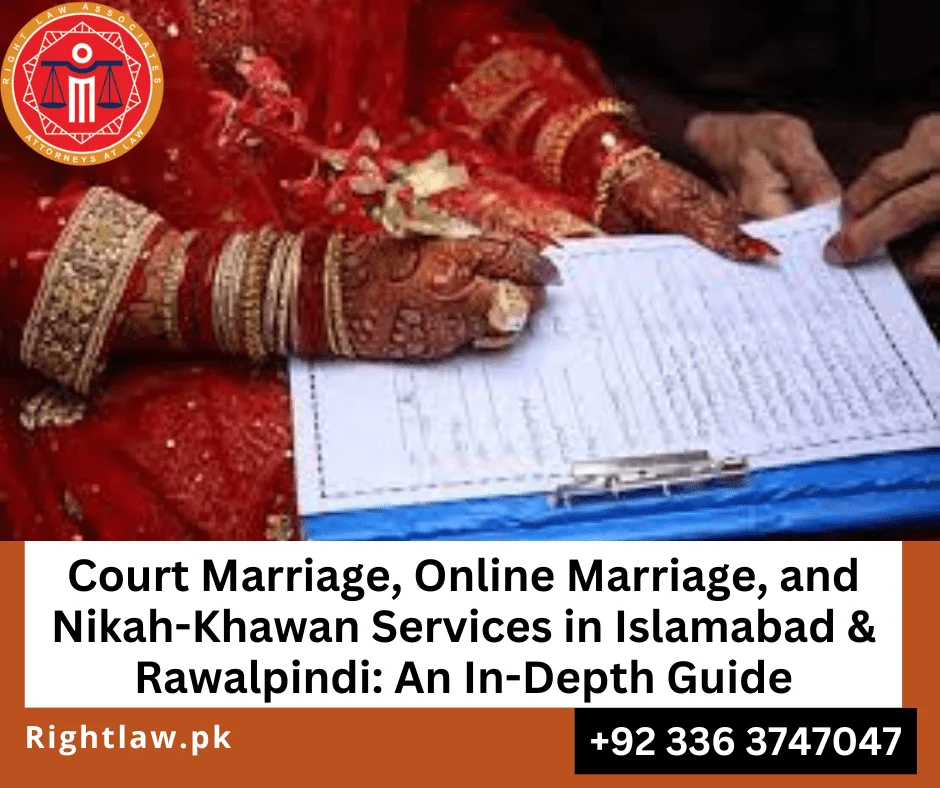
Online marriage has emerged as a contemporary solution for couples seeking to unite without the need for physical presence, particularly for those residing abroad or in different cities within Pakistan. This digital shift includes a comprehensive process grounded in legal and procedural frameworks established by governmental and religious authorities. In Pakistan, especially in urban centers like Islamabad and Rawalpindi, this innovative approach has gained notable acceptance, underpinned by the use of advanced technology and strict verification methods to ensure authenticity.
The process of online marriage in Pakistan typically begins with the couple expressing their intent to marry through a platform provided by an authorized service provider. Here, the Nikah-Khawan service plays a pivotal role, facilitating the exchange of matrimonial vows (Ijab-o-Qabool) under Islamic traditions. This service ensures that all religious prerequisites are meticulously adhered to, rendering the online marriage religiously valid.
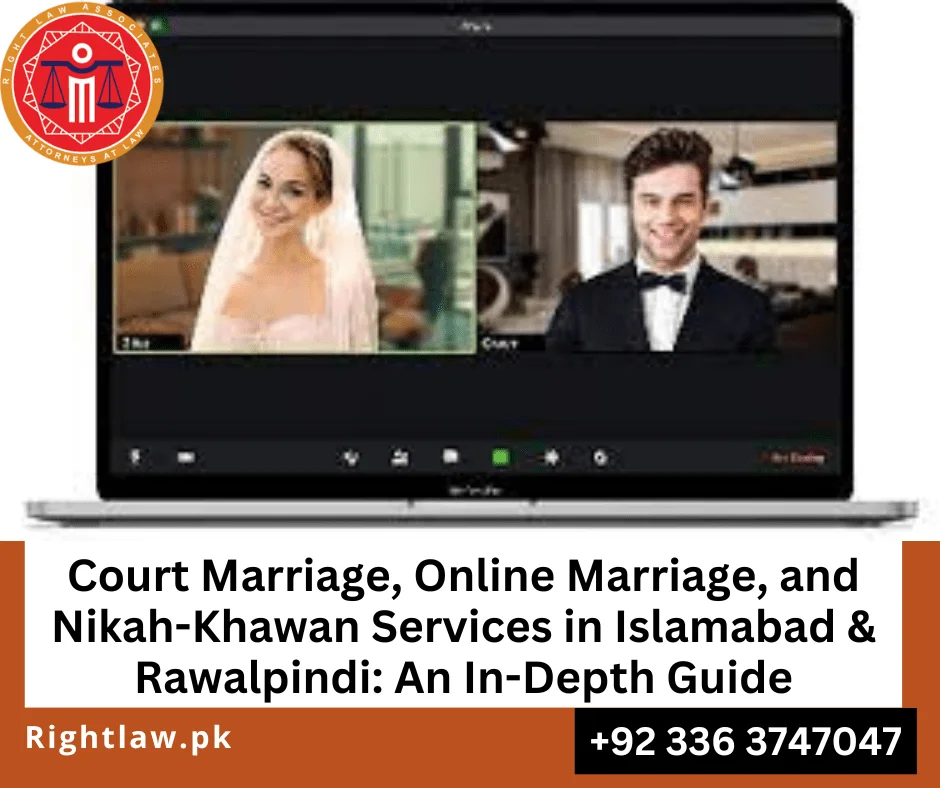
Technology is the cornerstone of online marriage, with video conferencing tools enabling virtual Nikah ceremonies in Islamabad and Rawalpindi. The presence of witnesses and the Nikah-Khawan is ensured through these digital interfaces, providing an experience akin to traditional settings but fostered in a virtual environment.
Beyond this, rigorous verification mechanisms for online marriages in Pakistan are in place to maintain the sanctity and legality of the union. This includes identity verifications through government-issued credentials and secure digital signatures to validate documents officially.
While the convenience offered by online marriage in Islamabad and Rawalpindi is significant, particularly for those geographically separated, it also presents certain challenges. One of the primary concerns is the absence of a physical gathering may detract from the personal touch and cultural significance typically associated with matrimonial ceremonies.
Despite these challenges, online marriages have effectively bridged the gap for numerous couples, demonstrating that technology can transcend traditional barriers, offering a viable and lawful avenue for matrimony in Pakistan’s evolving societal fabric.
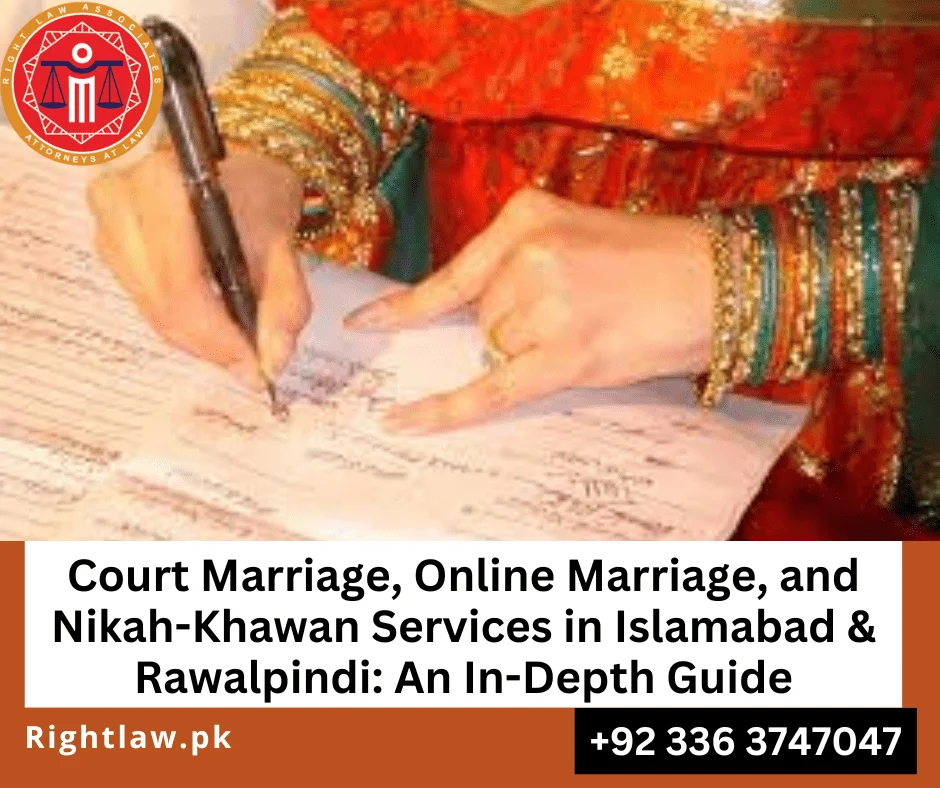
In the realm of matrimonial ceremonies in Pakistan, Nikah-Khawan services hold significant traditional and cultural importance. A Nikah-Khawan, essentially a religious officiant, plays a crucial role in solemnizing marriages according to Islamic tenets. In both Islamabad and Rawalpindi, these services are vital for ensuring that the marriage meets religious obligations and adheres to local customary practices.
Nikah-Khawans are generally well-versed in Islamic jurisprudence and are often affiliated with mosques or religious institutions. Their primary responsibility is to facilitate the Nikah, the formal Islamic marriage contract, which involves the mutual consent of both parties, the presence of witnesses, and the recitation of specific Quranic verses and prayers. By conducting these rituals, Nikah-Khawans not only officiate the marriage but also provide a religious and legal framework that is recognized under Pakistani law.
Choosing a traditional Nikah-Khawan offers several benefits. First and foremost, it ensures that the marriage is religiously valid, which is a crucial consideration for many Muslim families in Pakistan. Furthermore, a Nikah-Khawan’s involvement often lends an air of sanctity and gravitas to the occasion, imbuing the ceremony with deeper cultural and spiritual significance. The presence of a Nikah-Khawan during the marriage process helps preserve cultural traditions and reinforces the communal bonds that are central to Pakistani society.
In the cities of Islamabad and Rawalpindi, the demand for Nikah-Khawan services remains robust, even as options like online marriage and court marriage become more accessible. These services retain their relevance by providing a bridge between religious traditions and modern legal requirements. Though the legal framework surrounding marriage in Pakistan allows for court marriage and other formal civil arrangements, many still opt for the authenticity and holistic approach offered by traditional Nikah-Khawan services.
Ultimately, the incorporation of Nikah-Khawan services in the marriage formalization process not only fulfills legal and religious requirements but also enriches the cultural fabric of Pakistani society. Whether in bustling urban centers or quieter rural areas, these services continue to play a pivotal role, bridging traditions with contemporary practices.
In evaluating the various options for tying the knot in Islamabad and Rawalpindi, it is crucial to consider multiple factors such as legality, convenience, cultural acceptance, cost, and required documentation. Each method—court marriage, online marriage, and the Nikah-Khawan service—presents its own set of unique attributes, which cater to different needs and preferences of couples in these twin cities of Pakistan.
Legality: Court marriages hold a robust legal standing, as they are conducted under the supervision of judiciary authorities, ensuring compliance with Pakistani marriage laws. Conversely, online marriage services are gaining recognition, but their legal status may vary depending on verification and registration with local authorities. Nikah-Khawan services are deeply rooted in Islamic traditions, but documentation through legal channels often follows the ceremony for it to be fully recognized by the state.
Convenience: Court marriages, being an official procedure, require physical presence and can involve several visits to different departments. In contrast, online marriage offers unparalleled convenience, as the entire process can often be managed remotely. Nikah-Khawan services also provide a degree of convenience, as they can be held at locations chosen by the couple, minimizing travel and logistical concerns.
Cultural Acceptance: Cultural acceptance plays an essential role for many. Court marriages are legally respectable but may lack the traditional gravitas some families seek. Online marriages, while convenient, may face skepticism or resistance from more conservative segments of society. Nikah-Khawan services, on the other hand, align closely with cultural and religious expectations, making them widely acceptable across various familial and societal circles.
Cost: When it comes to cost, court marriages generally involve fees associated with legal paperwork and judicial processes. Online marriages might be slightly more affordable due to reduced logistical costs but may involve hidden fees for verification services. Nikah-Khawan services can vary widely in cost depending on the scale of the ceremony and additional services provided.
Documentation Required: Court marriages usually necessitate comprehensive documentation, including national IDs, witnesses, and possibly parental consent. Online marriages might require digital equivalents of the same documents, with additional steps for verification. Nikah-Khawan services typically require fundamental documentation but need to be supplemented by legal paperwork post-ceremony for complete recognition.
Choosing between court marriage, online marriage, and Nikah-Khawan services in Islamabad and Rawalpindi depends largely on individual circumstances and preferences. Each method offers unique benefits tailored to various legal, cultural, and practical needs, helping couples make informed decisions for their future together.
The decision to opt for various marriage services such as court marriage, online marriage, or the traditional Nikah-Khawan service in Islamabad and Rawalpindi brings with it a unique set of legal and cultural implications. These implications often influence couples’ choices and perceptions within these twin cities. Understanding these aspects is crucial for anyone considering these marital pathways.
In terms of legal frameworks, court marriage is often seen as the most straightforward and legally binding option, requiring minimal formalities. It is favored by couples seeking a streamlined process. However, societal acceptance can vary. Some conservative circles may view court marriage with skepticism, citing concerns about bypassing traditional customs. Nonetheless, the legal security offered, including official documentation, can be a significant benefit for these couples.
Online marriages have gained attention more recently, particularly in contexts like Islamabad and Rawalpindi where digitalization is on the rise. Despite its convenience, an online marriage can present legal challenges. For instance, the authenticity of online documentation and potential loopholes in legal recognition can complicate matters. Societal and familial acceptance also remains mixed, with older generations often displaying resistance to this modern approach. However, younger demographics tend to be more open to the convenience and accessibility that online marriages offer.
The Nikah-Khawan service remains a robust cultural cornerstone in the twin cities of Pakistan. This traditional service is widely accepted and is often mandatory for those adhering strictly to cultural and religious norms. Employing a Nikah-Khawan ensures that all religious rites are duly performed, providing a sense of communal and familial legitimacy. However, this service might not afford as much legal security compared to a court marriage unless supplemented with proper legal documentation.
Real-life examples illustrate these dynamics well. Consider a couple in Rawalpindi opting for court marriage to swiftly legalize their union yet encountering familial resistance preferring traditional Nikah-Khawan services. Similarly, another couple in Islamabad choosing an online marriage may find themselves navigating intricate legal channels to validate their union in the eyes of local laws.
Navigating the marriage services landscape in Islamabad and Rawalpindi requires an understanding of the various options available, including court marriage, online marriage, and Nikah-Khawan services. Each of these services offers distinct benefits and can be chosen based on specific needs and circumstances. The twin cities provide ample opportunities for couples looking to formalize their union legally and religiously while ensuring all legal requirements are met.
For couples considering a court marriage, it is crucial to understand the legal framework within which this process operates. Complete documentation and adherence to the legalities will ensure a smooth and hassle-free experience. Similarly, with the advent of technology, online marriage services have emerged as a viable option, especially for those facing geographical or logistical challenges. These services can provide a convenient and efficient means of solemnizing your union while remaining compliant with local laws.
The role of a Nikah-Khawan service cannot be understated for those seeking a traditional and religious ceremony. These individuals can guide couples through the spiritual and ceremonial aspects of marriage in compliance with Islamic principles. This aspect of the marriage process is equally important and should be approached with the proper guidance and consideration.
When selecting a marriage service in Islamabad or Rawalpindi, couples should consider factors such as legal requirements, convenience, and religious significance. It is advisable to seek professional advice and thoroughly research your options to make informed decisions. By doing so, you can ensure that your marriage process is not only smooth but also resonates with your personal and religious values.
Empowered with knowledge and clear information, couples can choose the best marriage service that aligns with their needs and circumstances, ensuring a meaningful start to their new chapter together.
Choosing our law firm for your court marriage, online marriage, and Nikah-khawan services in the twin cities of Islamabad and Rawalpindi ensures a seamless and professional experience. Our team of experienced legal experts specializes in navigating the complexities of matrimonial law, offering tailored solutions to meet your unique needs.
We pride ourselves on our meticulous attention to detail, ensuring that every legal requirement is fulfilled, from documentation to the solemnization of the marriage. Our firm is dedicated to upholding the highest standards of confidentiality and professionalism, providing you with peace of mind during these significant life events.
For unparalleled expertise in court marriage, online marriage, and Nikah-khawan services in Islamabad and Rawalpindi, contact our law firm today. We offer comprehensive consultations to understand your specific needs and provide personalized legal solutions. Our commitment to excellence ensures that your matrimonial process is handled with the utmost care and precision.
Whether you prefer an in-person court marriage or the convenience of an online marriage, our team is here to support you every step of the way. Reach out to us to schedule your consultation and take the first step toward a legally sound and beautifully conducted marriage ceremony.